PRECISION ESPRESSO TOOLS
Wood and steel,
calibrated for level extractions
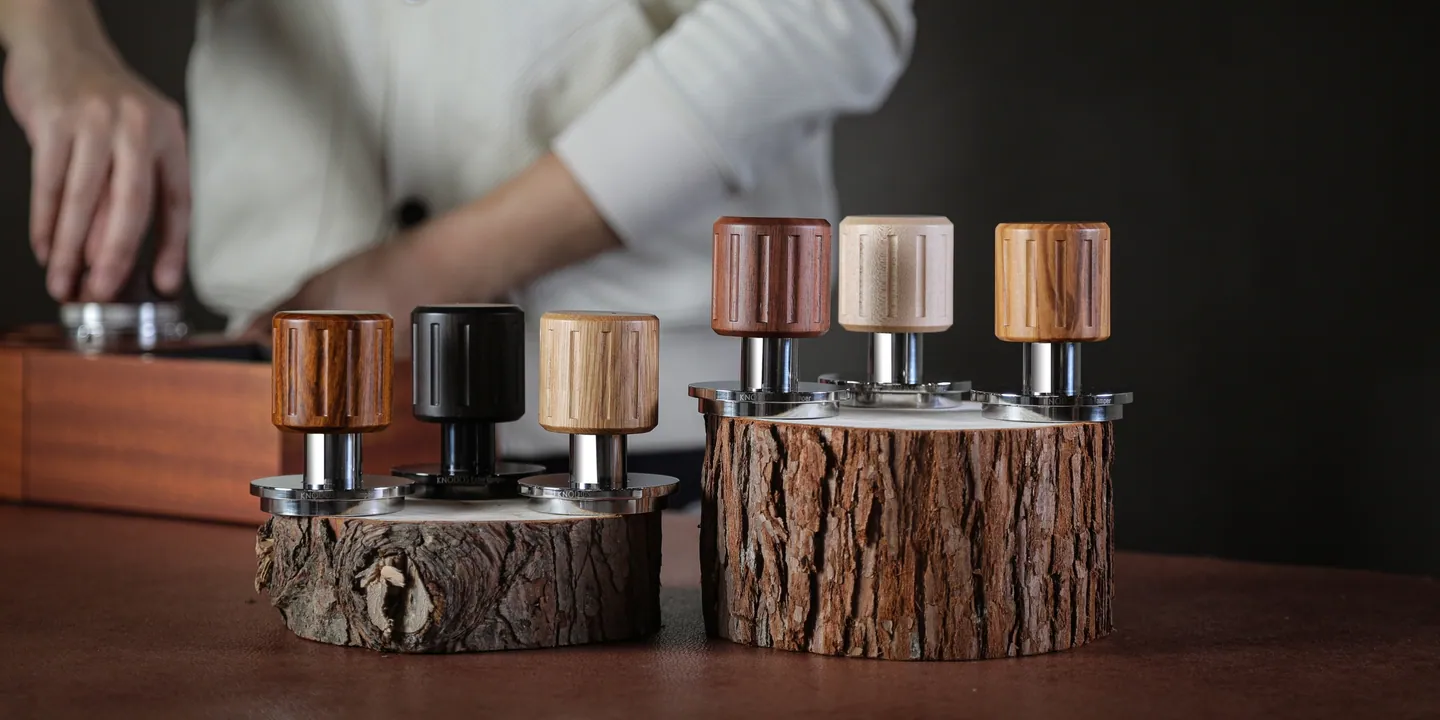
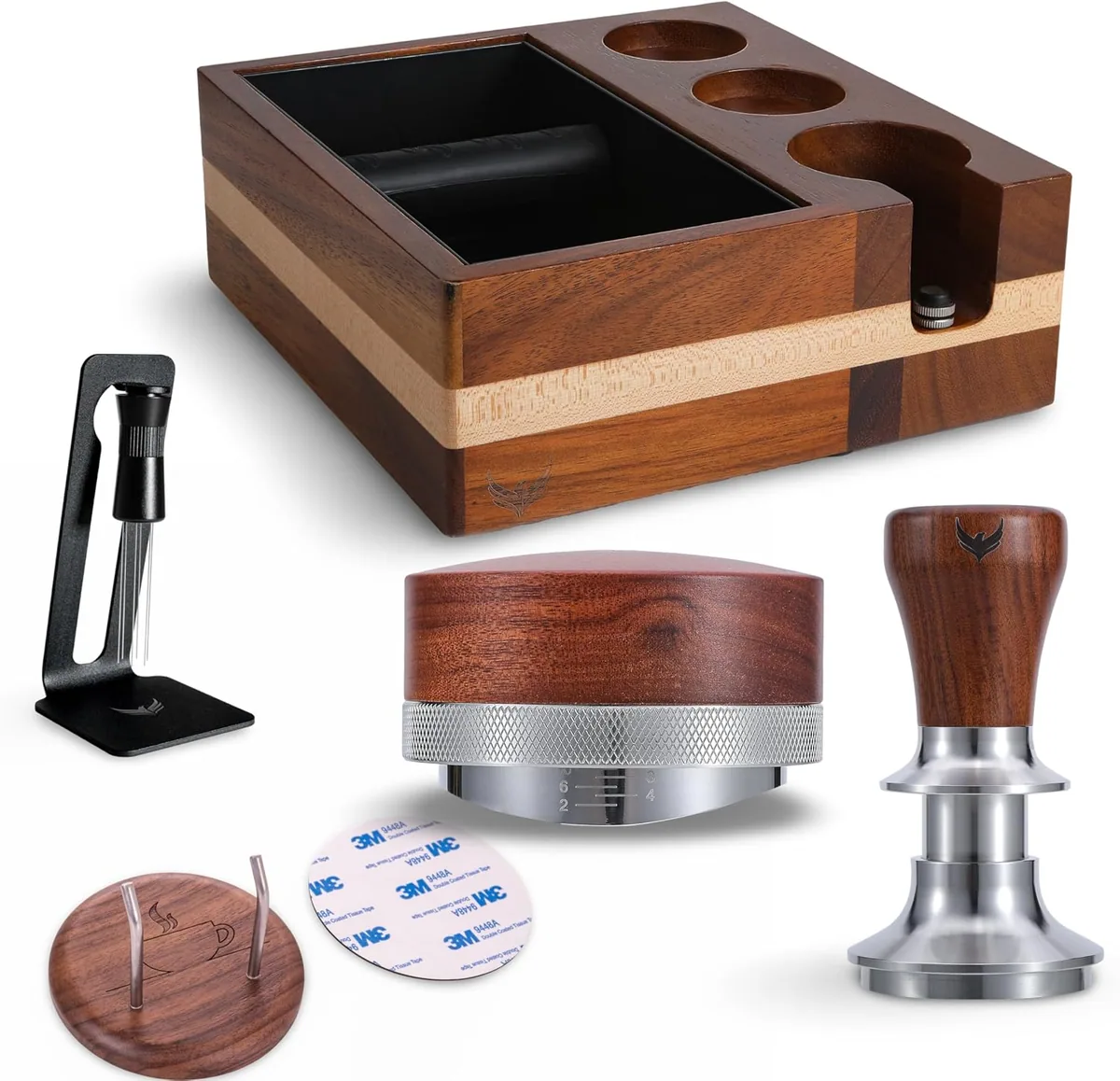
Our range brings consistency to your daily bar setup with calibrated tampers, tamping stations, bottomless portafilters, dosing funnels, and knock boxes. Every piece is turned in walnut, rosewood, and maple over stainless steel to support accurate dosage and level extractions.
The range
Shop by department
Browse our nine departments by the two decisions that shape your setup: group size and wood choice. Every tool lists its exact fit (51, 54, or 58 mm) alongside the specific wood it is turned from.
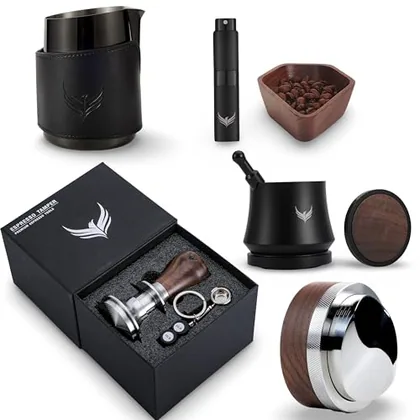
Tool Kits
158 products · The full bench in one box: tamper, station, funnel and screen, matched in the same wood.
Knock Boxes
9 products · A solid answer to the one messy step in every shot.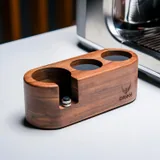
Tamping Stations
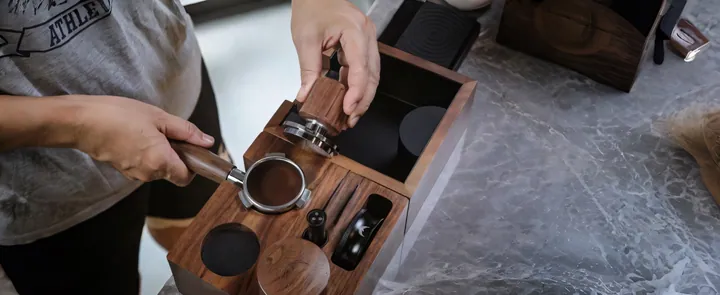
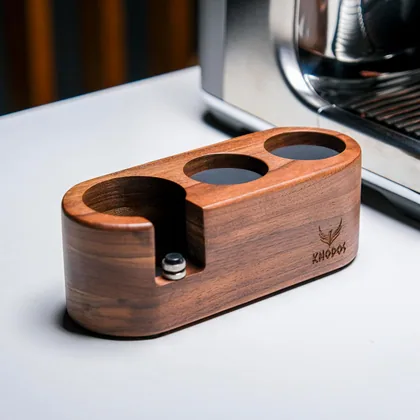
20 products · A seat for the portafilter and a home for the tools around it.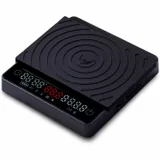
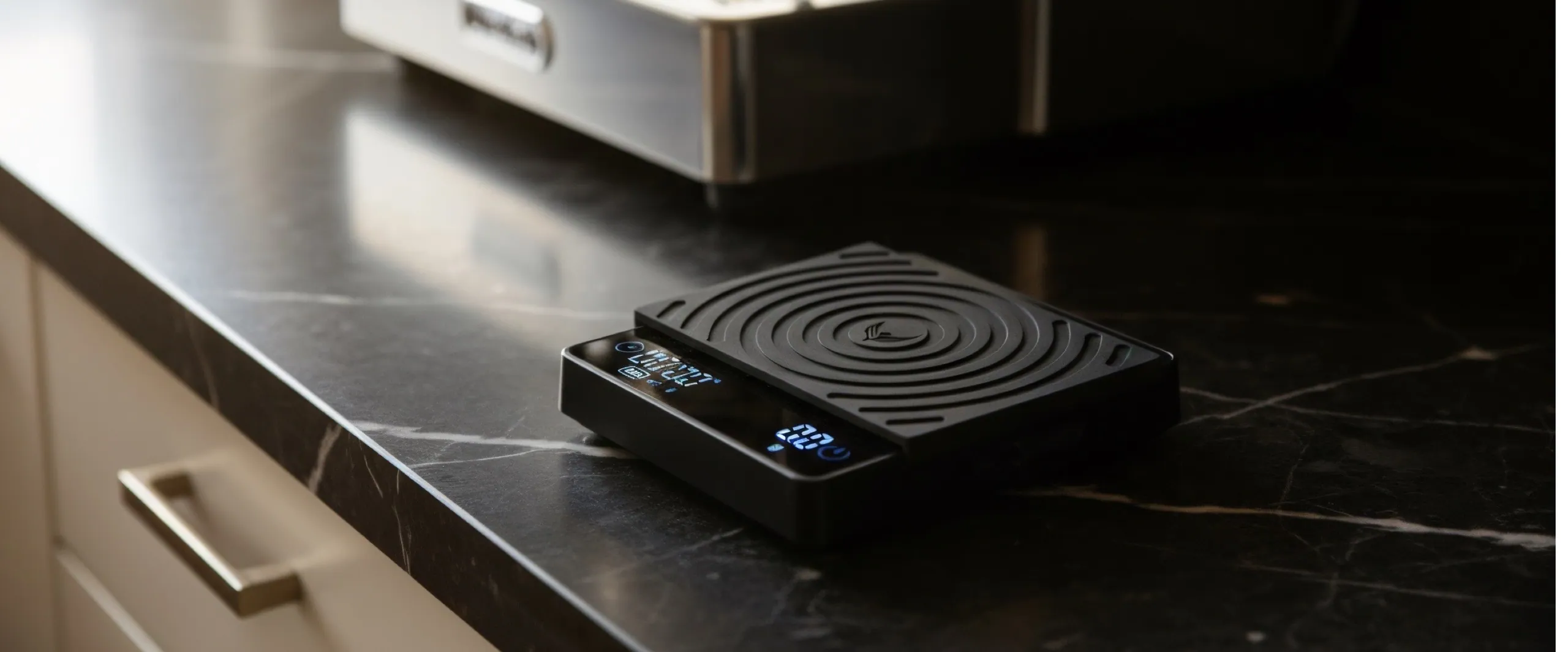
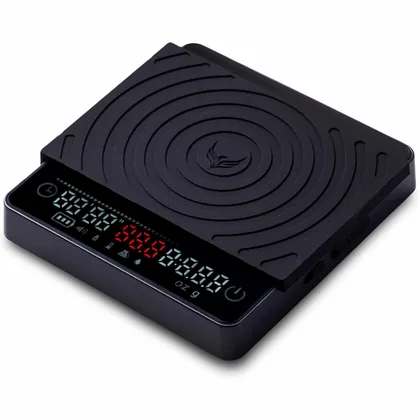
Coffee Scales
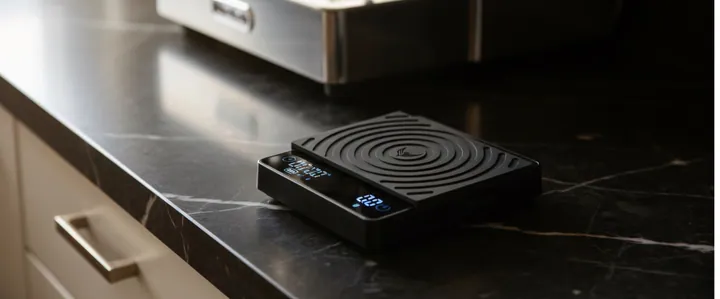
3 products · Grams and seconds, because espresso is a recipe.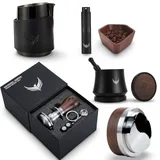
Bean Storage
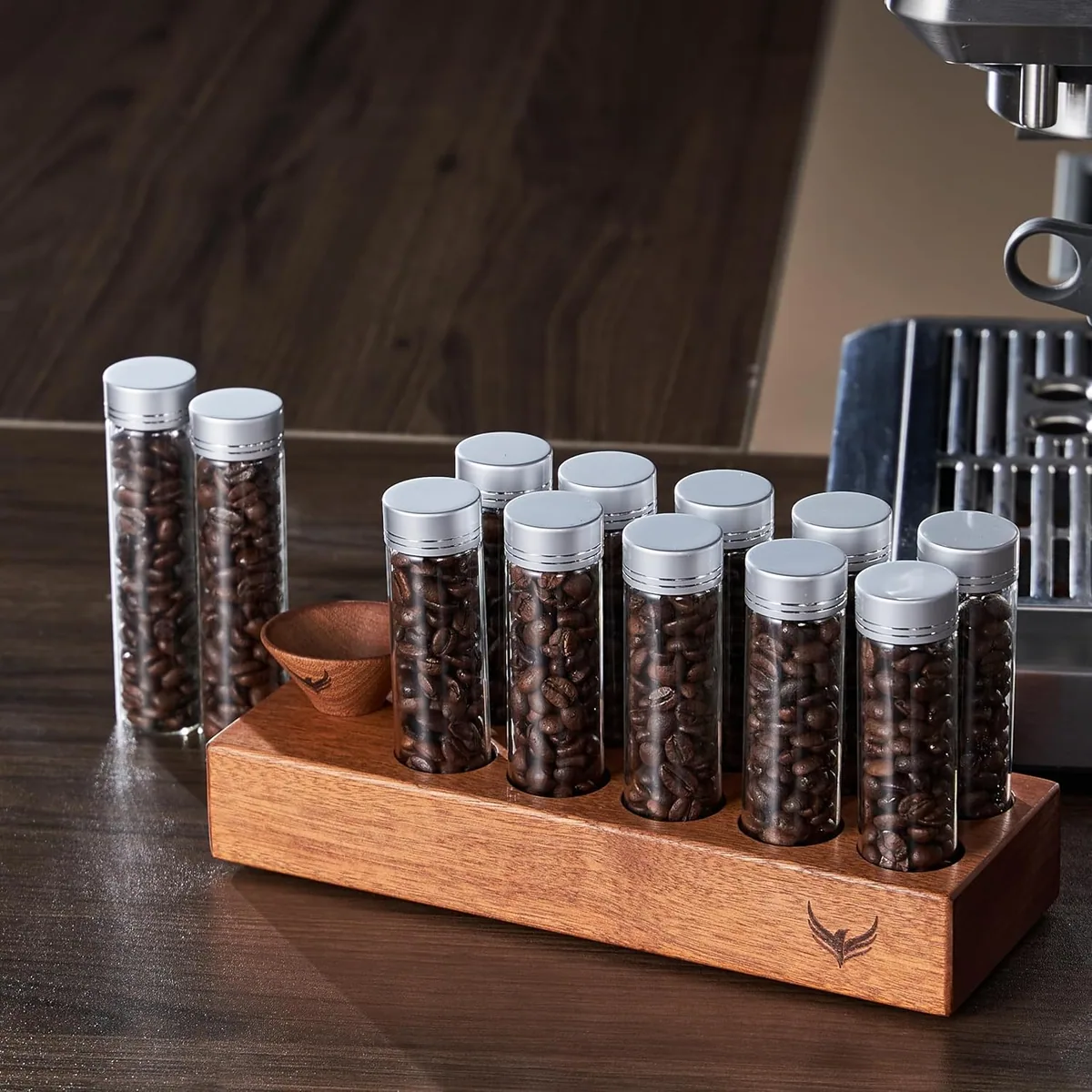
7 products · One shot per tube, weighed once, sealed until the grinder asks.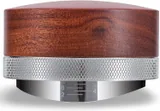
Distribution & WDT
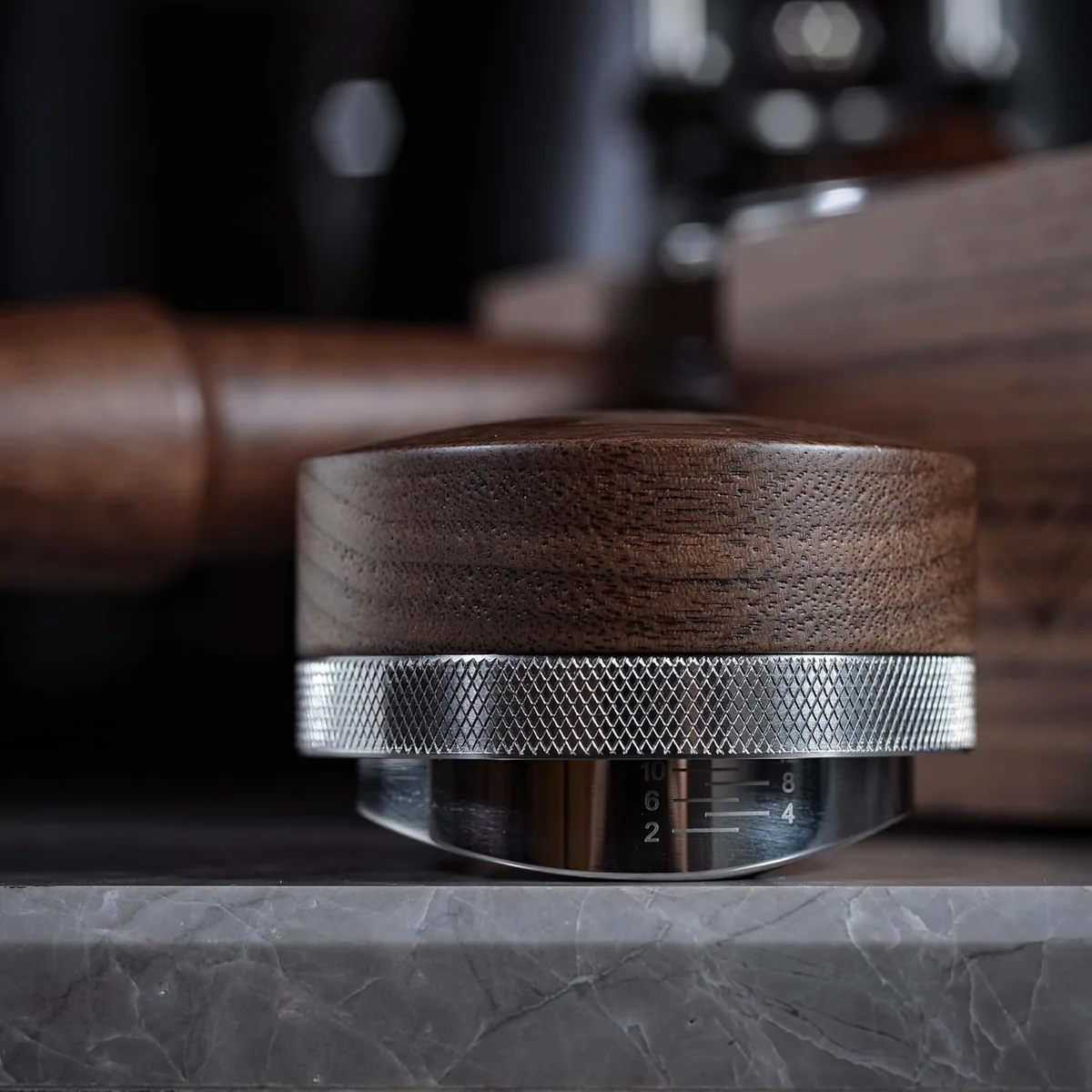
28 products · Even grounds before the tamp: needles and levelers that end channelling.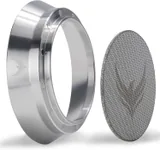
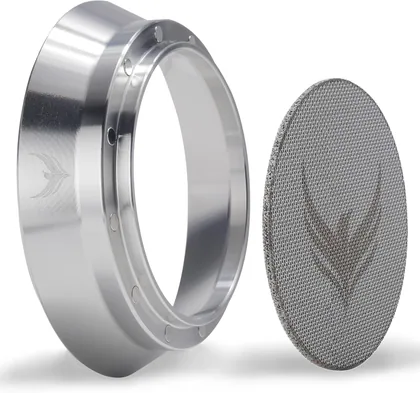
Dosing & Puck Screens
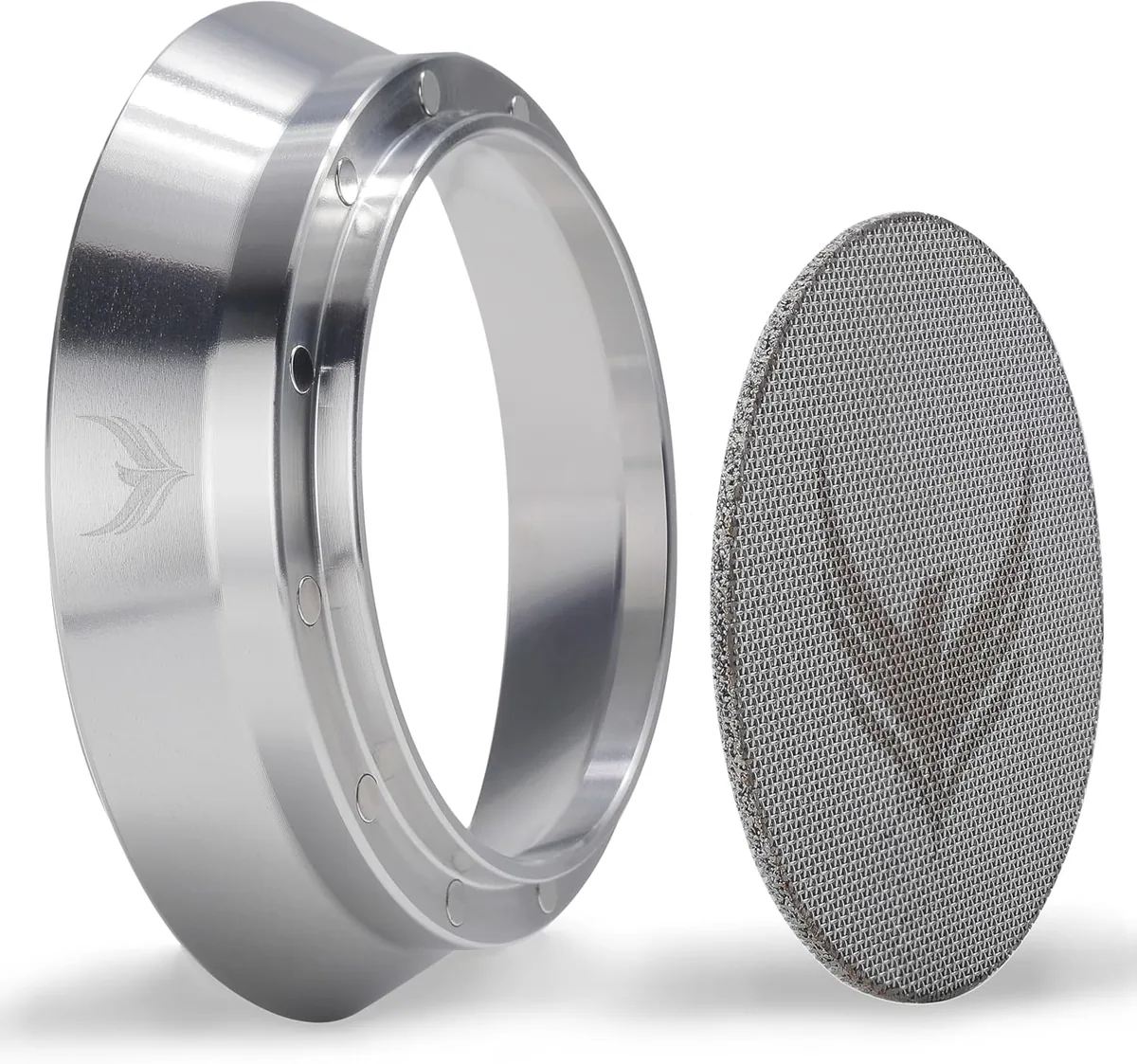
24 products · Keep the dose in the basket and the shower screen clean.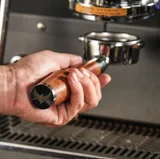
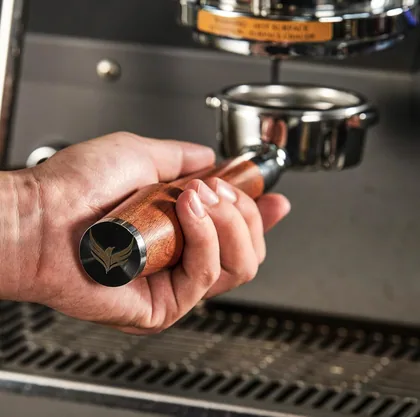
Portafilters & Baskets
14 products · The naked view of a shot, in a handle that matches the rest of the bench.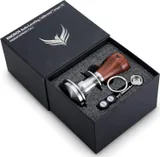
Tampers
18 products · Spring-loaded and self-levelling, so every press lands the same.Fit first
The fit calculator
Precision fit matters for espresso prep. A 54 mm tool will not work on a 58 mm group head. Select your machine line below to view the tools sized specifically for your setup. Three taps: your machine, what your bench already holds, the wood you like. The answer is your size and the exact tools that fill the gaps, at today's prices.
The bench, in order
Four steps before the water
Most channeled shots go wrong before you touch the brew switch. Preparing a bench follows a clear sequence: grind, distribute, tamp, and screen. Get those four steps right before water reaches the basket.
Step 1
Grind
Start with a burr grinder set to a fine table-salt texture. Published brewing guidance suggests aiming for 1 gram of dry coffee to 2 grams of brewed espresso over 20 to 30 seconds of water contact.
Step 2
Distribute
Grounds must sit evenly before pressure is applied. Published brewing guidance places distribution ahead of tamping, noting that purpose-made tools help prevent channeled paths. Explore our WDT needle stirrers and levelers to break up clumps.
Step 3
Tamp
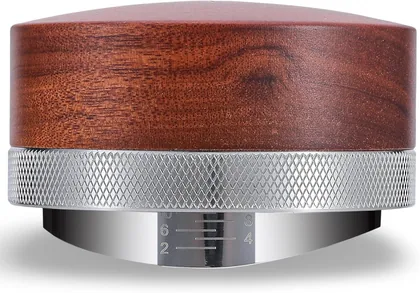
A compact, level puck lets water saturate the coffee bed evenly. Calibrated tampers land the exact same pressure every time. Pairing your tool with a tamping station gives the portafilter a stable, secure seat.
Step 4
Screen and brew
Adding a puck screen keeps the shower screen clean while spreading incoming water across the bed. Aim for a 20 to 30 second extraction, stopped by a digital scale rather than a guess.
Brewing figures from Espresso, how to brew, National Coffee Association (About Coffee), read 11 August 2026.
51 / 54 / 58
Know your group size
The measurement that decides the fit is your machine's own basket. When in doubt, measure the basket, not the outside of the portafilter. The size guide shows how.
Material
Three woods, one steel
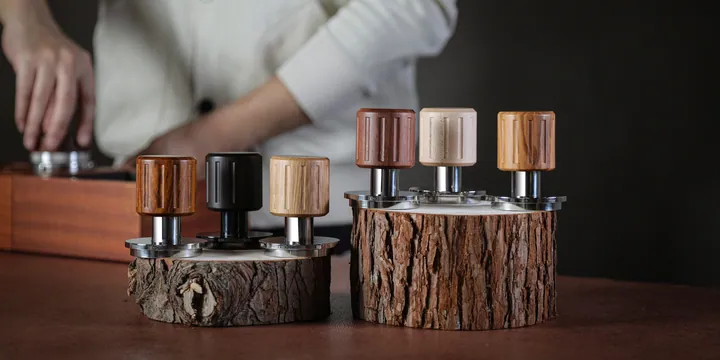
Our tools pair stainless steel bodies with solid hardwood handles and accents. Choose between walnut, rosewood, or maple depending on the look you want at your coffee bar and the feel in your hand.
Walnut
Dark brown with a clean, straight grain. Walnut finishes the largest share of our range for a classic coffee setup.
Rosewood
Deep red-brown and dense, rosewood features a strong figure that brings a warm contrast against stainless steel.
Maple
Pale and smooth with an even grain structure, maple serves as the light wood option across our tools.
From the bench
What KNODOS makes, and why it looks like this
KNODOS makes tools for the twenty seconds that decide a shot. Not machines and not beans: the small wooden and metal things that sit between the grinder and the group head, and that either help the water meet the coffee evenly or quietly get in the way.
A tool is right when you stop noticing it. Weight where the hand expects it, and a fit that does not argue with the machine.
We cover the bench in nine departments. Tampers, calibrated and spring loaded. Distributors and needle stirrers for the grounds before they are pressed. Dosing funnels, rings and cups that keep the dose in the basket instead of on the counter. Puck screens. Bottomless portafilters and the baskets to go in them. Stations that hold all of it upright. Knock boxes. Scales with timers. Glass tubes and wooden cellars for beans measured out a shot at a time.
Almost everything is built around one number: 51, 54 or 58 millimetres. That number is the width of your group, and it decides which of these tools drop in and which sit proud of the basket by half a millimetre and spoil the pour.
Wood, and why there is so much of it
Handles begin as boards of walnut, rosewood and maple, chosen for tight grain and even density. A board with a soft streak in it dents where a thumb rests, and a dented handle never stops being annoying. The blanks are turned on a lathe, sanded through progressively finer grits, and finished with oil or a sealant meant to live with water and coffee every day rather than to look good in a photograph.
Olive turns up in smaller runs, where the figure in a particular board is worth building a batch around.
Steel that has to agree with your machine
The metal is stainless, machined rather than cast, and the tolerances that matter get argued about in fractions of a millimetre. The gap between a distributor skirt and the basket wall. The depth a needle reaches, at 0.25 or 0.4 millimetres of wire. The travel of a thirty pound spring under a palm that presses harder some mornings than others.
Steel shafts are threaded into the hardwood rather than glued to it, so a joint that loosens after a year can be tightened instead of thrown away.
Put together by hand, checked at the bench
Assembly is hand work. Needle depth is set on each stirrer. Spring travel is tested on the self levelling tampers. Fit and finish are looked at before anything is boxed, which is the part of the job that cannot be handed to a machine and the part a buyer notices first, before any specification is read.
Tested the only way that counts
The people who make these tools pull shots every morning on their own machines. Prototypes go home with them. A distributor that needs two hands. A funnel that will not sit square in a Breville basket. A knock box bar that rings through a kitchen wall at six in the morning. Those faults get found by use rather than by measurement. Shapes here change slowly for that reason, and a shape that works tends to stay.
If you are starting out, start with the number on your machine and let it narrow the shelf. Then work outwards from the tamper: KNODOS tampers first, then KNODOS distribution and WDT tools, then a KNODOS knock box when the counter starts to get messy. The longer story is on the about page.
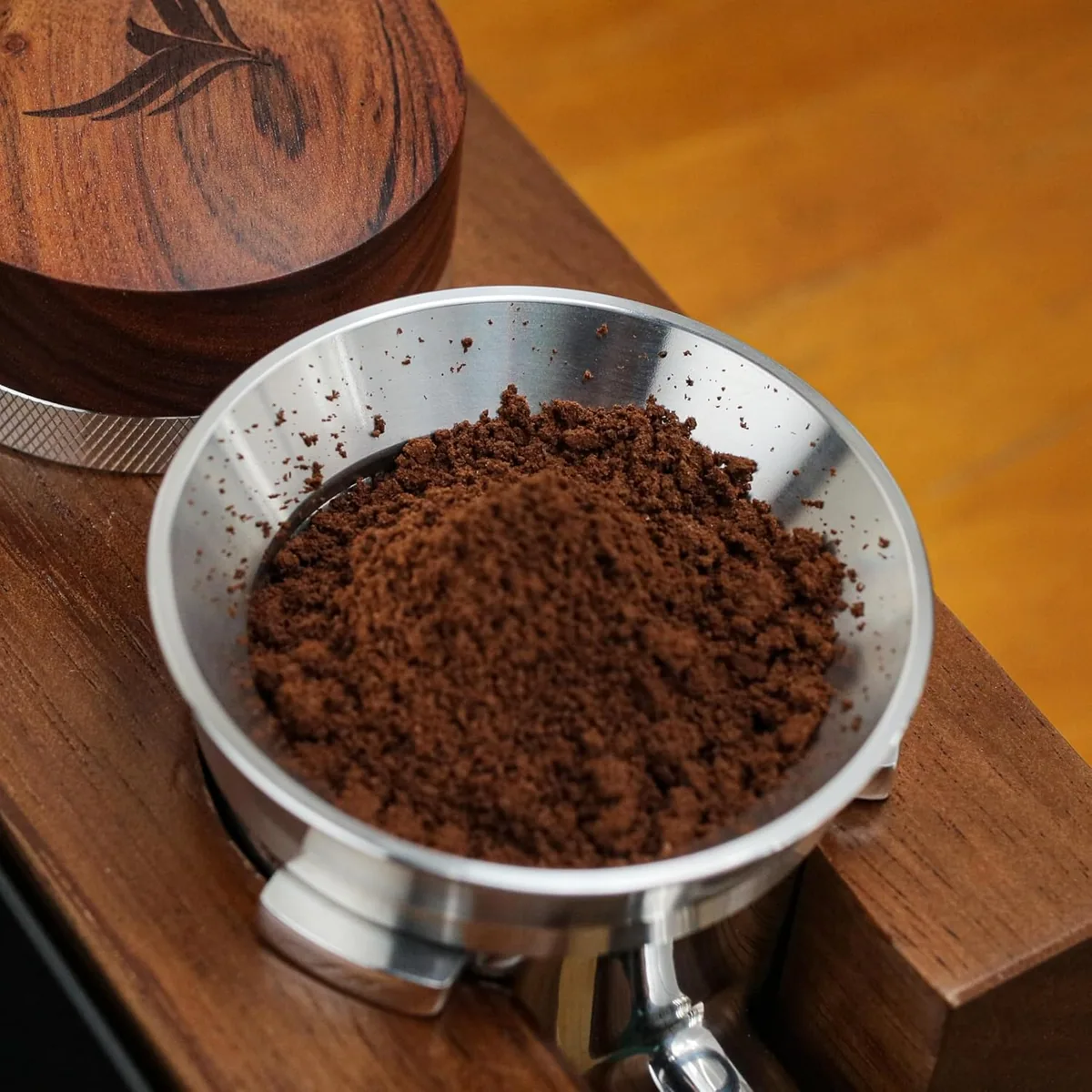
Freshness
Store beans like they stale, because they do
Whole coffee beans stale rapidly in open air. Single-dose glass tubes hold one shot each, weighed once, so your morning workflow stays quick and consistent.
Coffee faces four main enemies: air, moisture, heat, and light. Keeping beans in an airtight, opaque container in a cool, dark place prevents rapid aging. Whole roasted beans stay fresh for one to three weeks at room temperature, while ground coffee holds freshness for only one to two weeks. For best results, grind right before pulling your shot. Browse our bean storage department for single-dose tubes, stands, and dosing cups.
Storage guidance from Storage and shelf life, National Coffee Association (About Coffee), read 11 August 2026.
Bundles
The kits, compared
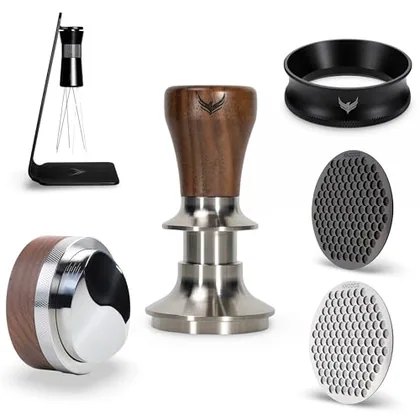
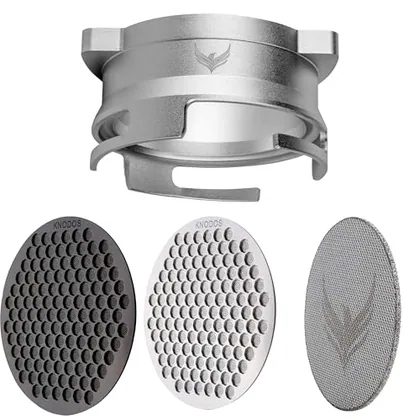
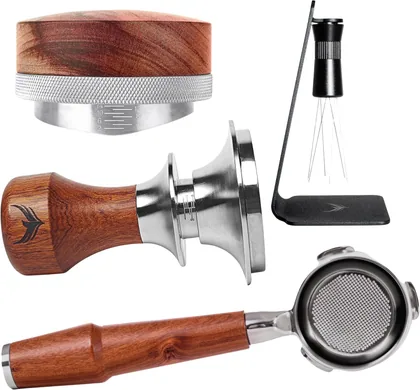
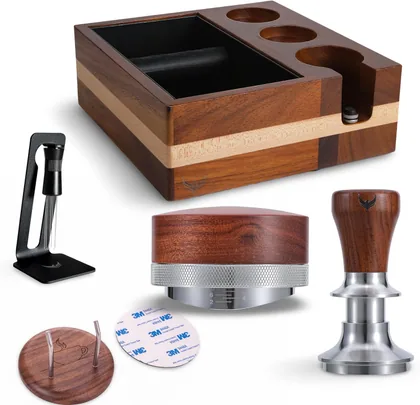
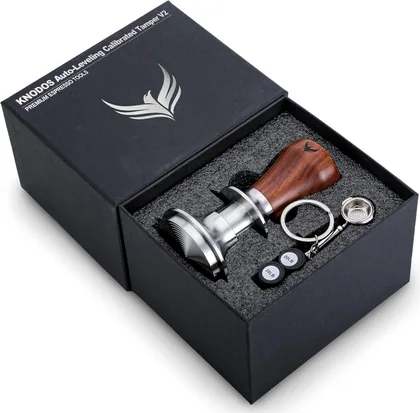
Our tool kits collect your espresso bench into one order, matched in the same wood. Because two six-piece kits can contain entirely different tools, compare the actual contents side by side. Each kit page lists every item included.
 2pieces
58mm Tamper Kit 2-Piece →
2pieces
58mm Tamper Kit 2-Piece →
 3pieces
54mm Portafilter Funnel and Puck Screen Kit Grinder 3-Piece →
3pieces
54mm Portafilter Funnel and Puck Screen Kit Grinder 3-Piece →
 4pieces
54mm Breville Espresso Machine Accessories Tamper Set 4-Piece →
4pieces
54mm Breville Espresso Machine Accessories Tamper Set 4-Piece →
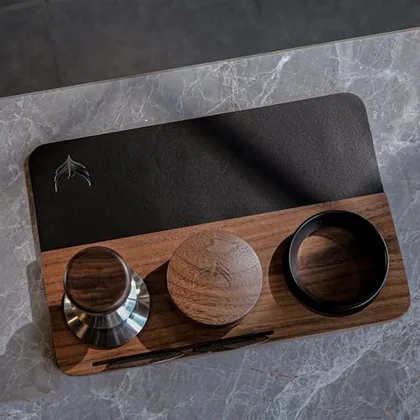 5pieces
54mm Coffee Tamper Kit 5pcs →
5pieces
54mm Coffee Tamper Kit 5pcs →
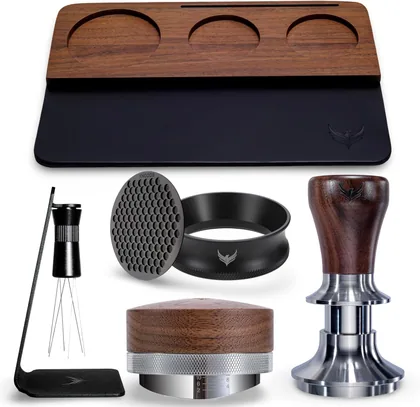 6pieces
58mm Walnut Espresso Tamper Kit 6pcs →
6pieces
58mm Walnut Espresso Tamper Kit 6pcs →
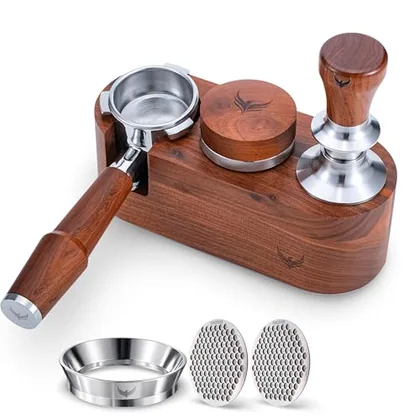 7pieces
54mm Rosewood Breville Bambino Accessories Kit 7pcs →
7pieces
54mm Rosewood Breville Bambino Accessories Kit 7pcs →
Care
Wipe, do not soak
Good espresso tools last for years with simple maintenance. Wipe them down after each session, and never submerge wooden parts. Coffee oils wipe clean off stainless steel, but standing water opens wood grain and ruins fine oil finishes.
- Steel partsRinse stainless steel tools under warm water after daily use and dry them completely with a clean towel.
- Wood handles and stationsWipe wood handles and tamping stations with a damp cloth and dry them immediately, keeping them out of standing water and away from the dishwasher.
- Puck screensRinse puck screens right after pulling a shot, and soak them in warm water occasionally to clear fine coffee particles from the mesh.
- Knock boxesEmpty your knock box daily, as wet spent grounds trap moisture against the wooden walls.
On the bench
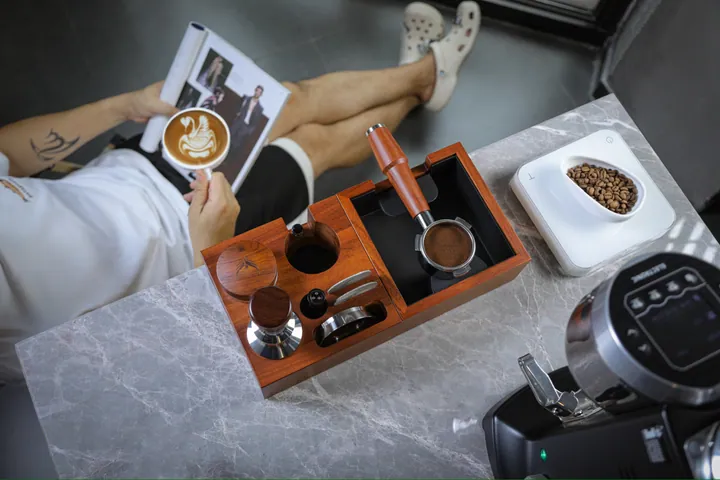
The range at work
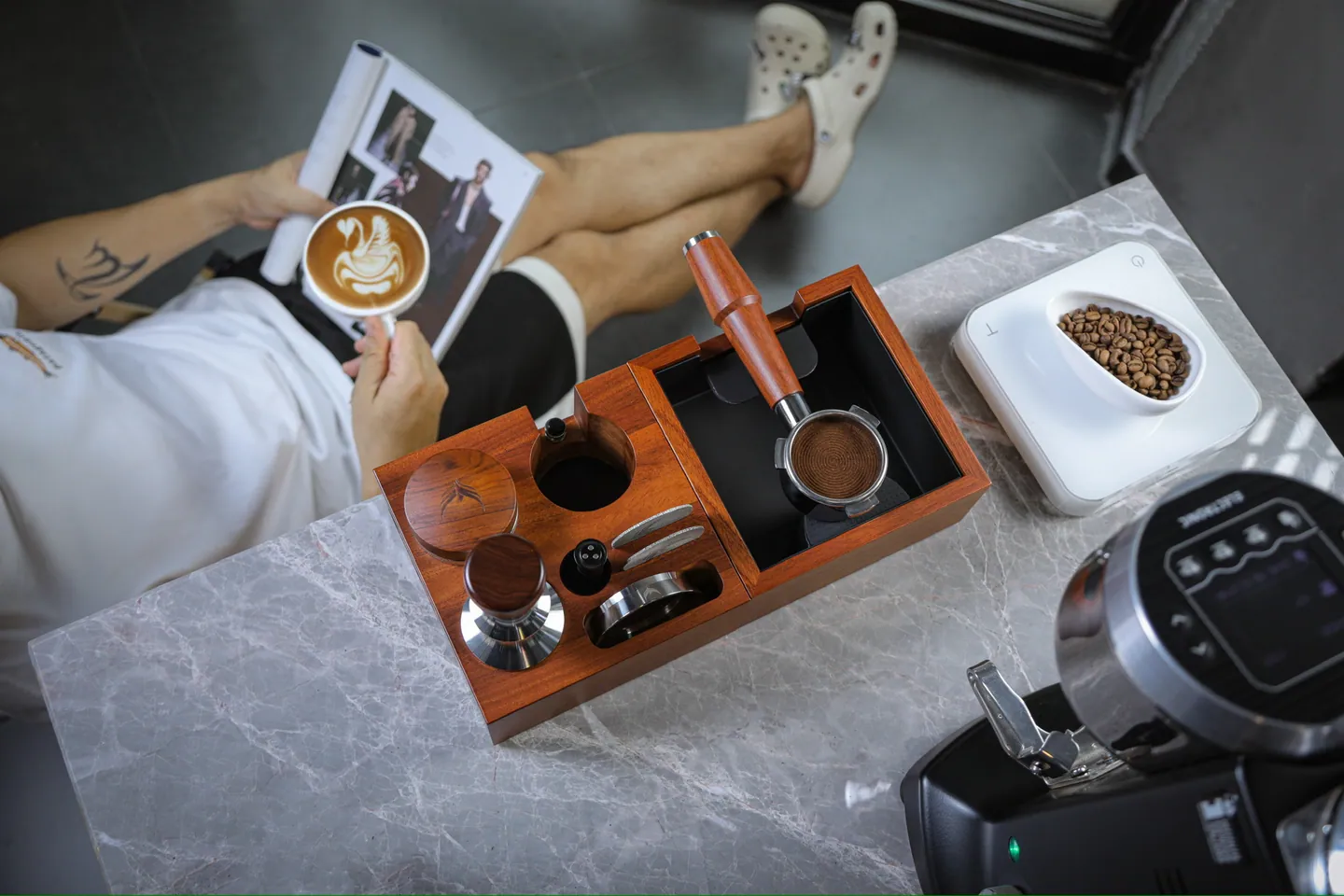
A look at our tampers, stirrers, and wooden stations set up on the bench.
The journal
Guides from the bench
51, 54 or 58 mm: the group size guide
What group size actually measures, which machines run 51, 54 and 58 mm, how to measure your basket, and why a tamper cannot be half a millimetre wrong.
Read the guide →
Walnut, rosewood, maple: wood on the espresso bench
Why espresso tools are turned in wood over steel, what walnut, rosewood and maple are actually like to live with, and how to keep a wooden handle for years.
Read the guide →
Puck prep, in order: distribute, tamp, screen
Why espresso goes wrong before the water arrives, what WDT needles, calibrated tampers and puck screens each fix, and the order that makes a shot repeatable.
Read the guide →A place to start
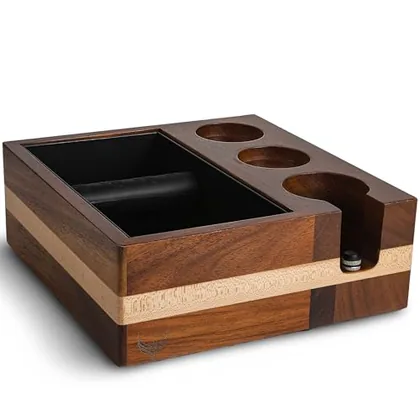
One from each department

In their words
Nine reviews, five of them not five stars
We publish what customers wrote, word for word, including the spelling and the complaints. Five of the nine below sit under five stars, because a page of nothing but praise tells you nothing. Reviews cover a whole group of sizes and woods together, so the variant each writer bought is named underneath.
Solved My Static Problem — Cleaner Grinding and Better Workflow
I added the KNODOS Coffee Bean Dosing Cup and RDT Sprayer Gift Set to my espresso setup and it’s one of those small accessories that makes a big difference in the overall coffee workflow.I originally bought this because I was having serious static issues when grinding fresh beans, which meant coffee grounds were flying everywhere and making a mess during the grinding process. The included RDT sprayer completely solved that problem. After a few light sprays, a quick shake of the beans, and one more spray, the grinding process is now locked in with little to no mess.The ceramic dosing cup is also very well made and feels solid and balanced in the hand. It makes measuring and transferring beans into the grinder quick and clean, especially if you single-dose your coffee.Everything in the kit feels high quality and thoughtfully designed, and it looks great next to the rest of my espresso gear.Overall, this set helped clean up my grinding process and improved my workflow significantly. If you’re dealing with static from freshly roasted beans or just want a cleaner, more consistent setup, this is an excellent accessory set. Highly recommended for home baristas.
Decent but rusting
It's decent enough quality, but the metal insert is starting to rust. How am I supposed to clean it if it I can't get the insert wet?
Breville-Compatible Declutter Solution
We bought this station for our Breville expresso maker to declutter our countertop. Everything fit perfectly. It's sturdy, good quality, heavy, and beautifully designed. We would buy again.
Worth the weight. ;)
So far so good. Getting the double touch to activate the change in mode was a bit tricky to get it just right. It's two very quick taps by the way, not two spaced pushes.
Quite happy with this
The wood base is nice quality and the tubes have enough capacity to hold 18g of medium roast beans, so this is perfect to streamline my morning with an XBloom. The insides of the tubes taper a bit at the top to allow for the threads. This isn’t ideal, but a little shake shake easily takes care of getting the beans in and out. Honestly, these things would be better made shorter and wider but they wouldn’t be as cool-looking.
Looks good, works, but static retention is a thing.
Looks good, solid construction, but retention is annoying. A lot of grounds static-cling to the lid and interior, also causing them to not fall from the shaker easily without “ringing the bell” violently. It forces me to use a brush to get all the retained grounds into my basket, which means puck prep takes longer.All in all the shaker does what it’s supposed to do, but the static retention SUCKS. Notably, I do still use a WDT to comb the top of the grounds before settling and tamping, since they’re not falling consistently from the shaker into the basket.
Espresso disk
does what is expected but not sure if it really makes a difference with or without disk?
Looks amazing, really poorly designed
Like the title says, it looks and feels amazing right out of the box. But noticed even before making its first espresso shot that the handle was loose. I went to tighten it and I guess it stipped out the wood? I’m not sure who in the design department thought it would hold??? I’m going to have to either return it or fix the companies mistake.I’d definitely stay clear of this one until they come up with a better design.
Satisfying to use high quality (Fellow ES1)
Using with a Fellow ES1. Oversize fits perfectly. Comes with 25# spring installed. 20 and 30 lb springs included. I changed mine out with the 30# spring. Very simple to do. Looks great and tamps perfectly. Very satisfying consecutive rings. Quality is very nice.
From the bench
Our own video
A short film from the KNODOS channel: the knock box and tamping station in use. It loads only when you press play.
Before you buy
What to look at when you compare
Five checks worth making on any espresso tool, and what our own figures say.
| What to check | KNODOS | A tool with none of this |
|---|---|---|
| Fit | Basket size printed per tool: 92 at 58 mm, 150 at 54 mm, 17 at 51 mm. | Sold as universal, which in practice means it sits proud of the basket and tamps unevenly. |
| Material | Named per tool: walnut, rosewood, maple and three more, with stainless steel where the load goes. | Described as premium wood, with no species and no way to know what happens when it gets wet. |
| Assembly | The steel stem threads into the wood rather than being glued, and each tamper is checked before packing. | A glued joint that works loose after a few months of twisting. |
| Ratings | Printed where a rating was collected and left blank where none was. | One average for the whole shop, which says nothing about the tool in your basket. |
| Reviews | 25 of 118 published reviews sit below five stars, faults included. | A wall of five star quotes with no way to tell what was filtered out. |
Questions people ask before buying
The ones that come before the wood and the millimetres.
Is KNODOS a real brand?
Yes. We design and build espresso tools in wood and steel, and this site is our own range: 281 tools, with the basket size, the wood and the machines each one fits printed on its page. Where a tool does not state something, the line is missing rather than filled in with a guess.
Where are the tools made, and who ships them?
The wood is chosen, turned and finished in our own workshop, and every tamper is assembled and checked by hand before it is packed. The parcel is not ours. Ordering, payment, delivery and returns happen at checkout with our retail partner, and the address on the box is theirs.
How do I return one, and how long do I have?
Returns go through the retail partner you ordered from, inside the window they show at checkout. We do not set that window, so we do not print a number here that we cannot honour. For a tool that arrived damaged, start the return there and it is handled under their policy.
How do I know it fits my machine?
By basket size, not by brand name. Of our 260 sized tools, 92 are 58 mm, 150 are 54 mm and 17 are 51 mm. A 54 mm tool fits a Breville or a Gaggia Classic; 58 mm covers most E61 group machines, Lelit, Profitec and Rocket. Measure the inside of your basket if you are unsure, because the portafilter body is wider than the basket it holds.
Is there a warranty?
There is no published warranty, so we do not claim one. What we do publish is the material, the size and the fit for every tool, and the reviews we collect, including the ones that describe a fault.
What do the critical reviews say?
Of the reviews on this site, 25 of 118 sit below five stars, and they are printed word for word. The recurring complaints are a magnet that is weaker than expected on one dosing funnel, a metal insert that showed rust for one buyer, and a screen thicker than someone wanted. We publish those because a page of nothing but praise tells you nothing.
Wood and water: how do I look after it?
Wipe the wood, never soak it, and keep it out of the dishwasher. Steel parts rinse under the tap and dry with a cloth. Oiled wood takes a drop of food-safe oil once or twice a year. That is the whole routine, and it is the same one that keeps a wooden kitchen handle alive for years.
Why do some tools here have no star rating?
Because no rating has been collected for that tool yet. We print one where it exists and nothing where it does not. A zero or a borrowed average would be a number nobody published.